Why Position Feedback Matters in Vacuum Motion Systems
Position feedback plays a critical role in vacuum motion system performance. This article explains how incremental, absolute, magnetic and optical encoders compare, and why the best choice depends on the complete mechanical and control system.
When specifying a vacuum motion system, engineers often prioritise stroke length, load capacity, vacuum performance and motion range. However, position feedback is just as important, as it determines how reliably the system can monitor movement, repeat positions and recover after a restart.
As vacuum motion systems become more motorised and integrated into automated equipment, encoder selection for vacuum manipulators, transfer arms and positioning stages can influence repeatability, integration complexity, operator confidence and overall performance.
The right encoder is not always the highest-resolution option. It is the one best matched to the mechanical system, control architecture and application requirements.
What does an Encoder do?
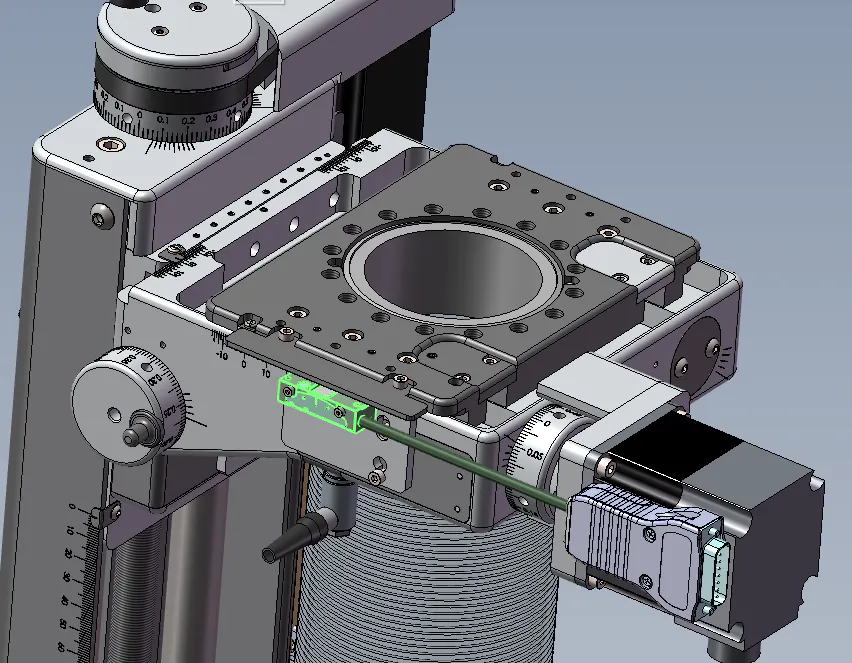
An encoder provides position feedback to the motion control system, allowing it to monitor movement, track position and support reliable, repeatable motion in vacuum applications.
Depending on how the encoder and controller are integrated, this feedback can support automated operation, closed-loop control and simplified system integration.
Incremental vs Absolute Encoders
One of the first decisions when selecting a feedback system is whether an incremental or absolute encoder is required. Understanding incremental vs absolute encoders helps ensure the chosen feedback method matches the motion system and control requirements.
Incremental Encoders
Incremental encoders measure movement relative to a known reference position.
When the system is powered on, a homing sequence is typically performed using dedicated home switches. Once homed, the controller can accurately track the position of the mechanism throughout its range of motion.
Incremental encoders offer several advantages:
- Cost-effective solution
- High repeatability
- Straightforward integration
- Well suited to many automation applications
- Compatible with UHV Design MASC controller systems
For these reasons, incremental encoders are the most commonly specified option on many vacuum motion systems.
The primary consideration is that position information is not retained when power is removed. Following a power cycle, a homing sequence is normally required before operation resumes.
Absolute Encoders
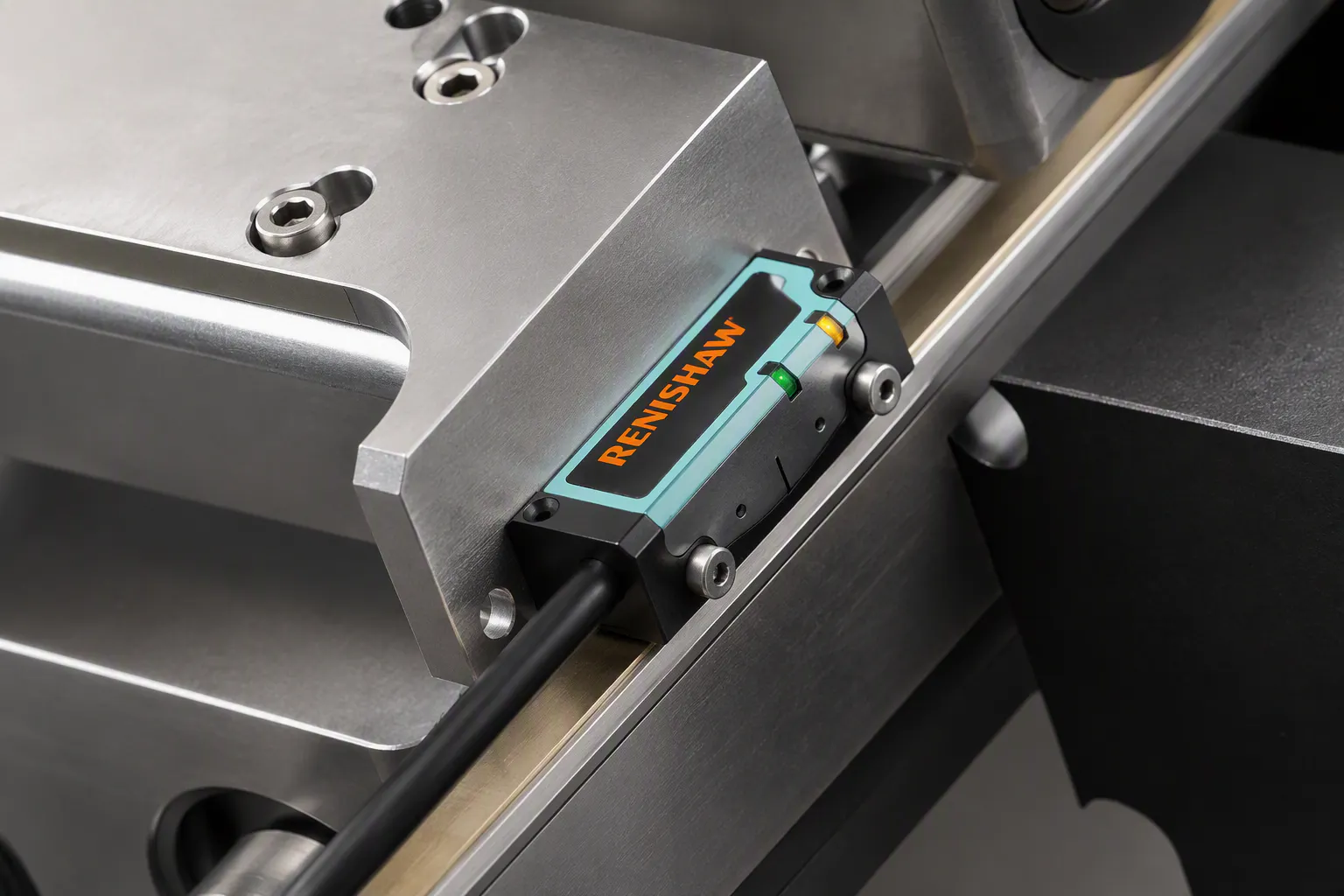
Absolute encoders provide a unique position value for each point in their measuring range. This allows the control system to identify position after power is restored and can remove the need for a homing sequence after a power cycle, provided the wider system preserves the required reference and configuration.
Absolute encoders provide a unique position value for each point in their measuring range. This allows the control system to identify position after power is restored and can remove the need for a homing sequence after a power cycle, provided the wider system preserves the required reference and configuration.
Potential benefits include:
- Position can be identified after power is restored
- A homing sequence may not be required after restart
- Useful for specialist automation applications
However, absolute encoders generally introduce greater cost and additional integration considerations compared with incremental systems.
Where absolute position feedback is required, UHV Design can provide customised solutions using alternative control platforms, including the MSMC controller range. Potential benefits include:
Position can be identified after power is restored
A homing sequence may not be required after restart
Useful for specialist automation applications
However, absolute encoders generally introduce greater cost and additional integration considerations compared with incremental systems.
Where absolute position feedback is required, UHV Design can provide customised solutions using alternative control platforms, including the MSMC controller range.
Magnetic vs Optical Encoders
Once the feedback philosophy has been selected, the next step is determining the encoder technology. For many systems, the choice between magnetic and optical encoders depends on the required balance of robustness, resolution and integration complexity.
Magnetic Encoders
Magnetic encoders use magnetic fields to determine position.
For vacuum motion systems, they often offer an excellent balance between repeatability, robustness and cost.
Advantages include:
- Robust design
- Resistant to contamination
- Reliable long-term operation
- Cost-effective solution
- Well suited to industrial and research environments
For many motorised vacuum manipulators and transfer systems, magnetic encoders provide the required feedback performance without unnecessary cost or complexity.
Optical Encoders
Optical encoders use a light source and coded scale to determine position.
They can provide extremely fine resolution and are often used where specialist positioning requirements exist.
Potential benefits include:
- Very high resolution
- Suitable for demanding positioning applications
- Available for customised systems
Optical encoders can offer very fine resolution, but that capability only improves usable performance when the mechanics and controller can respond at a comparable level.
The encoder should always be considered as part of the complete system rather than as a standalone component.
Why Higher Resolution Doesn't Always Improve Performance
A common misconception is that selecting the highest possible encoder resolution will automatically improve system performance.
In reality, the encoder must be matched to the mechanical capabilities of the motion system itself.
Real-world example: When more resolution created more problems
In one application, a customer requested an encoder with significantly finer resolution than the mechanical system required.
The encoder was capable of detecting very small position changes, but the motion system itself could not reliably produce or repeat movements at that same level. As a result, the extra feedback resolution did not create finer usable motion.
Instead, the controller began responding to position errors that were smaller than the mechanism could realistically correct. Depending on the control settings and mechanical behaviour, this can cause repeated correction around the target position, making the axis harder to settle consistently.
This highlights an important point: higher resolution does not automatically result in better performance.
Encoder selection should be based on usable system performance, not resolution alone. The encoder, controller and mechanical system must all be considered together.
Repeatability vs Resolution
Resolution often receives the most attention when comparing encoder options, but it should not be considered in isolation.
The overall system consists of multiple elements:
- Encoder resolution
- Mechanical stiffness
- Drive system design
- Leadscrew or ball screw characteristics
- Bearings and support arrangements
- Control system behaviour
An encoder with extremely fine resolution provides little practical benefit if the remainder of the system cannot take advantage of it.
In many applications, selecting a well-matched encoder results in a system that is simpler, more stable and easier to commission.
Integration Considerations
Position feedback should also be considered from a controls perspective.
Questions to consider include:
- Which controller will be used?
- Is a homing sequence acceptable?
- Is position retention after power loss required?
- Will the system be manually operated today but automated later?
- Are there existing site standards that must be followed?
For many applications, incremental encoders integrate easily with standard motion control hardware and provide all the repeatability required for reliable operation.
Where specialist requirements exist, customised encoder and controller solutions can often be provided to suit the wider system architecture.
When Should a Custom Encoder Solution Be Considered?
Standard encoder options are suitable for many vacuum applications. However, some systems benefit from customised solutions.
Common reasons include:
- Specific controller requirements
- Existing site standards
- OEM integration requirements
- Higher resolution requirements
- Absolute position feedback requirements
- Custom wiring schemes
- Special connector arrangements
In these situations, selecting the correct encoder is often less about achieving the highest specification and more about ensuring smooth integration with the complete system.
Choosing the Right Position Feedback Solution
For many vacuum motion control applications, magnetic incremental encoders offer a robust and cost-effective balance of repeatability and straightforward integration. More specialised applications may justify absolute or optical feedback, but only when the mechanical system, controller and operating requirements can make practical use of those capabilities.
The right encoder is the one that delivers the required feedback while remaining compatible with the mechanics, controller and operating environment.
Key Takeaway:
The best encoder choice is not always the option with the highest resolution. For reliable and repeatable vacuum motion control, position feedback should be matched to the mechanical system, controller and application requirements.
Need help choosing the right encoder for your vacuum motion system?
Contact UHV Design at sales@uhvdesign.com to discuss your application. Our team can review your motion requirements, control architecture and operating environment, then help identify a suitable position feedback solution for your vacuum manipulator, transfer arm or customised UHV motion control system.