Automation in motion: How motorised manipulators can improve safety, speed and repeatability
Manually actuated manipulators offer valuable versatility for applications involving different sample sizes, multiple sample positions and complex multi-axis motion. However, as industrial and research facilities seek faster, more repeatable processes, advances in motors and controllers are driving increased demand for automated manipulation systems.
Many UHV Design products are available with motorised or pneumatic actuation as standard, with a range of encoder options for applications requiring positional feedback.
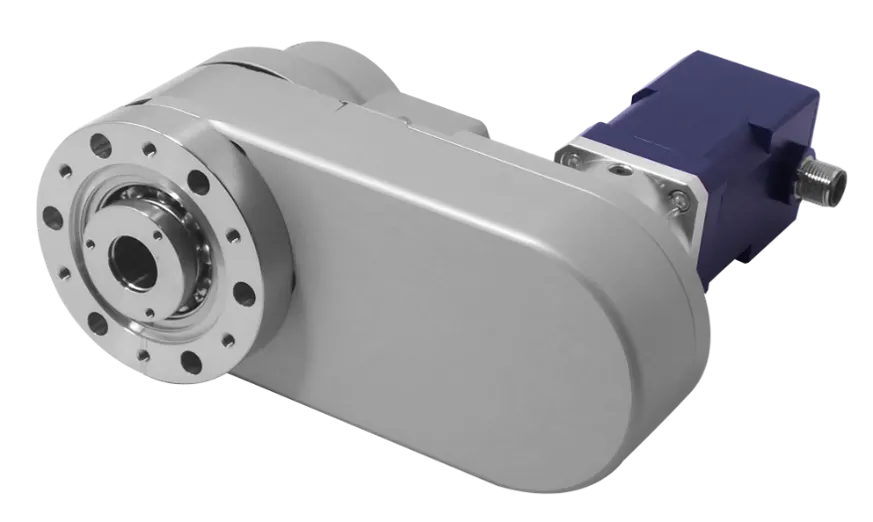
In addition to our standard motor options, we can integrate customer-specified motors or supply motorless units. This flexibility is particularly useful for existing installations because it allows customers to standardise the same motor model across multiple system components.
When automation adds value
Whether you are designing a new system or developing equipment for a specific application, identifying where motorised manipulation could improve safety, speed, repeatability or operator efficiency will help you determine the most appropriate level of automation.
✔ Enabling remote and unattended operation: For applications with regular and anticipated motion over an extended period of time, automation gives you the freedom to leave your equipment partially or fully unattended while you dedicate your time to more hands-on tasks.
✔ Faster motion: When the duration of your work is heavily reliant on moving between multiple positions, automation allows you to reduce transition time, which in turn leads to a faster turnaround.
✔ Reducing the risk of operator error: Manual manipulators allow operators to identify issues and adjust the process quickly, but they can also introduce variability and the risk of handling errors. Automating repeatable movements can help reduce incidents such as contact with a gate valve or a dropped sample during transfer.
✔ Maintaining precise motion out of sight: Viewing ports and restricted chamber angles can make it difficult to observe a manipulator throughout its movement. Once a motorised system has been correctly configured, it can perform controlled sample transfers without requiring the operator to watch every stage through a viewport.
Not just for new systems: Retrofitting existing equipment
For many of our users, components are moved between systems over their lifetime, and even on existing systems, requirements can change over time. Replacing manual manipulators with motorised versions, or returning existing equipment to the manufacturer for modification, can be a costly experience and can sometimes lead to periods of downtime where work has to stop entirely.
UHV Design equipment is designed with upgradability in mind, enabling customers to expand the capabilities of compatible equipment on site and potentially reduce the cost and downtime associated with replacing or returning existing units.
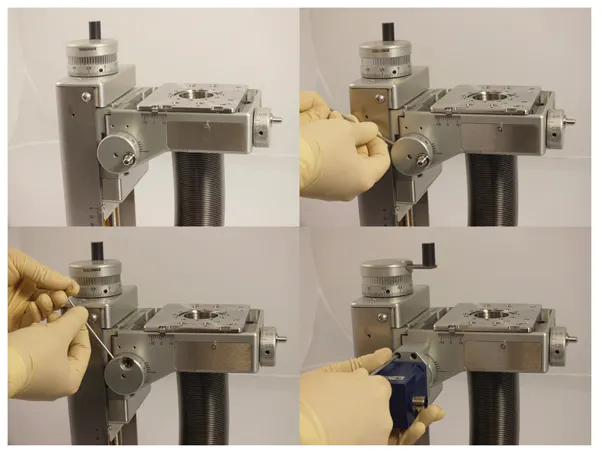
For customers considering an upgrade, motorisation can be combined with positional feedback options to support safer and more reliable operation. The following section explains how encoders and switches can help monitor manipulator position and reduce the risk of collisions.
Improving positional awareness with encoders and switches
When your application includes delicate equipment, or is left running fully unattended, knowing the position of your manipulator at all times can be a non-negotiable requirement to avoid serious clashes.
In the absence of someone personally watching your experimental process at all times, motorisation, in conjunction with positional feedback equipment such as limit switches, home switches, and encoders, can be used to help prevent overextension, collisions, and loss of synchronisation in the stepper motor.
A common application for position switches is a system incorporating a load-lock chamber. A switch at the fully retracted position can confirm that the transfer arm is clear before the gate valve closes, reducing the risk of a collision and helping to protect both the valve and the transfer arm.
Limit switches and encoder options are available across UHV Design products that are compatible with motorisation. Our design engineers can also integrate specified feedback devices, including absolute encoders, into custom designs where required. Because an absolute encoder retains positional information, it can identify a manipulator’s location after a power interruption without requiring the system to return to its home position. In complex processes such as multi-axis hand-offs, this capability can reduce the time needed for manual checks before restarting and lower the risk of collisions during homing. If you have a manually actuated UHV Design manipulator and would like to explore motorisation, positional feedback or other upgrade options, contact our sales team at sales@uhvdesign.com to discuss your application.